


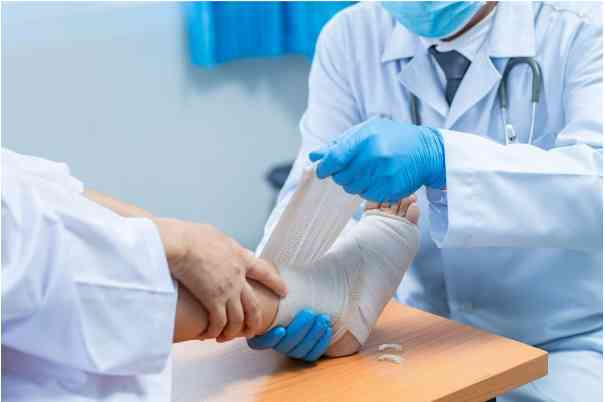
Contemporary foam dressings play an imperative role in the healing process. Today, there is a profound understanding of wound healing physiology that has led to the creation of innovative care products.
There are a wide range of products available, so choosing the best wound care can be difficult for novices. Podiatrists and specialists need to know about the different products available so they can choose the most appropriate style for the patient.
Foam wound care is one of the most essential materials on the market. First introduced in the 1970s, they are now one of the most widely used materials for a number of reasons.
We will take a look at this and more below:
What are they?
Top quality foam dressings comprise either polyurethane or silicone material. They typically have two layers: a hydrophobic outer to prevent leakage and an inner hydrophilic layer that rests against the wound. They can be adhesive or non-adhesive depending on the patient’s needs.
Non-adhesive options require additional dressing to secure them to the wound. Typically, these designs have an adhesive wound contact layer, whilst thick designs may not contain an adhesive layer.
They are available in a range of shapes, sizes and thicknesses. Some of their forms include conforming shapes, rolls and wafers. They can also be utilised as cavity treatments.
They are highly permeable to water, as well as being highly absorbent. Therefore, they are incredibly suitable for injuries with moderate-heavy exudate. As they have fantastic absorptive capability, they can be used alongside alginate and collagen primary treatments.
They allow for the loss of water vapours through the dressing’s outer layers. The amount of moisture transmission varies depending on the treatment, and can be changed by covering the treatment with hosiery or another support.
What are their benefits?
This style comes with a range of fantastic benefits that make them popular in modern wound care. Podiatrists and specialists use them due to their ability to closely resemble what could be considered the ideal wound dressing (something deemed impossible to achieve!).
Some of their awesome benefits include:
- Easy to remove: These styles are one of the easiest to remove from the patient’s skin. They also protect the peri-wound skin from external trauma and patients report less pain when using and removing this treatment;
- Moist wound healing: Optimal healing occurs in a moist wound microenvironment. This style can optimise the wound environment’s moisture levels which stimulates healing;
- Bacteria protection: This style protects the wound bed from external contamination and bacterial infection;
- Adaptable: This style is highly dynamic which makes it perfect for treating a wide range of injuries across multiple anatomic locations. They can be cut to match the wound’s size;
- Cost-efficient: They are highly economical and don’t require numerous changes, allowing for up to seven days placement without the need to change:
- Non-toxic: They are hypoallergenic and non-toxic;
- Highly absorptive: They have an incredibly high absorptive capability which makes them ideal for wounds with moderate-heavy exudate:
- Improved wound healing: Foam dressings are found to provide optimised wound healing for patients.
As you can see, this is a style that is not only more comfortable for the patient, but can also provide an optimised healing environment, too! As such, they have become one of the most popular styles in modern medicine, ensuring the patient can have an improved healing experience.
It’s for these reasons that you won’t find a specialist without them close at hand!